First Seeds
September 2025
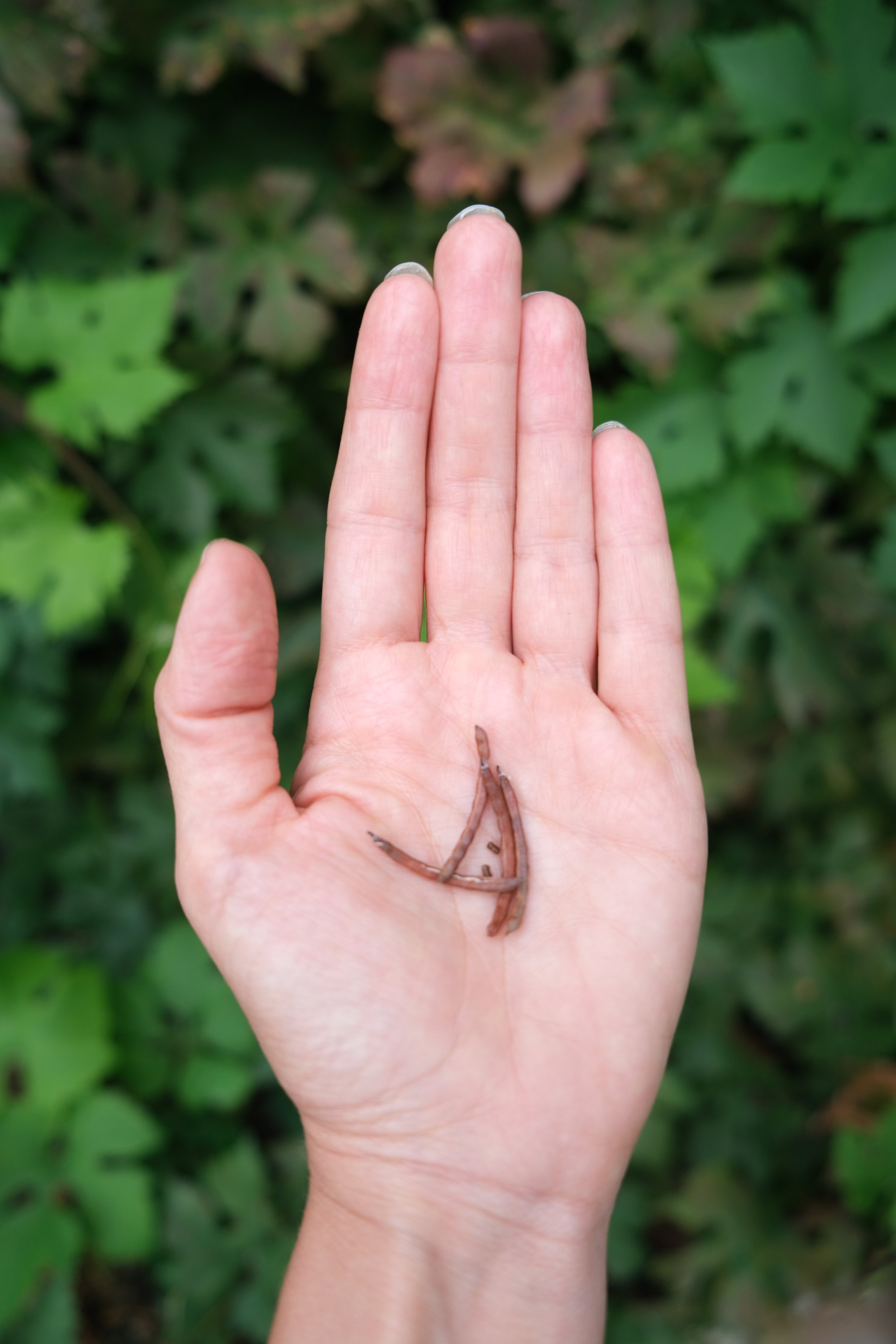
Indigofera Tinctoria seeds, Tamil Nadu
As Rashmi, founder of Avani, a social cooperative in the mountains of Uttarakhand will tell you, finding and buying natural dyes in India is not the problem. Intention is what matters.
Right now, dyes available on the market will tell you roughly where they are from, but not whether they have been ethically sourced and processed, who grew them, and how much they were paid, or whether the land they came from is being responsibly managed. The only way we can guarantee those things is by building relationships with people we trust who are proud to share their story and the story of those being uplifted.
Just as we scrutinise the origins of our food, we should be asking where our natural dyes come from and the conditions of those providing them. Meeting Rashmi left us feeling inspired, curious, and eager to ask bigger questions. It strengthened our desire to build something that makes a difference - and brings joy and prosperity to those it impacts.
The dyes are imbued with the spirit of the hands that made them. They carry the rhythms of life in the mountains - a life lived slowly, peacefully, and in harmony with nature. In a small way, they can bring us closer to living with greater purpose ourselves.
When we set out for India, we imagined returning with hundreds of photographs and sacks full of natural dyes to begin our business. Instead, we came back with only a handful of both. A single sighting of an Indigofera bush spotted at the Colours of Nature. A few sulphur cosmos flowers in Auroville. A couple of photos of the acacia catechu and sappanwood trees once we realised they were lining the streets of Pondicherry.
Yet despite bringing home far less than we expected, we feel infinitely richer.
What we've gained is a much clearer sense of what matters to us, what we're trying to achieve, who we want to work with, and what our next steps should be.
Another big discovery on this trip is how much of the dyes we use are literally “waste”. Pomegranate rinds, walnut husks, jackfruit skins. These plants, and many others like marigolds are abundant and grow wild or occur as by-products of other harvests.
This creates opportunities for people to collect and sell materials that would otherwise be discarded. In some cases, it creates two sources of income from the same tree. Walnuts, for example, can be sold for both the husk (for dyes) and the nut (for food).
It also revealed how inefficiently we use our natural resources. Rather than making use of materials that are literally falling from trees, we manufacture synthetic chemicals in factories, often in unsafe conditions, creating products that pollute ecosystems and harm human health.
Natural dyes offer a different possibility. They can create livelihoods that allow people to remain in rural settings, living close to nature and working in rhythm with the seasons, rather than feeling compelled to leave for cities and office jobs.
Wherever this journey takes us, we want to remain a people-first company, recognising that caring for the people involved at every stage is fundamental to looking after the planet and creating a more sustainable future.