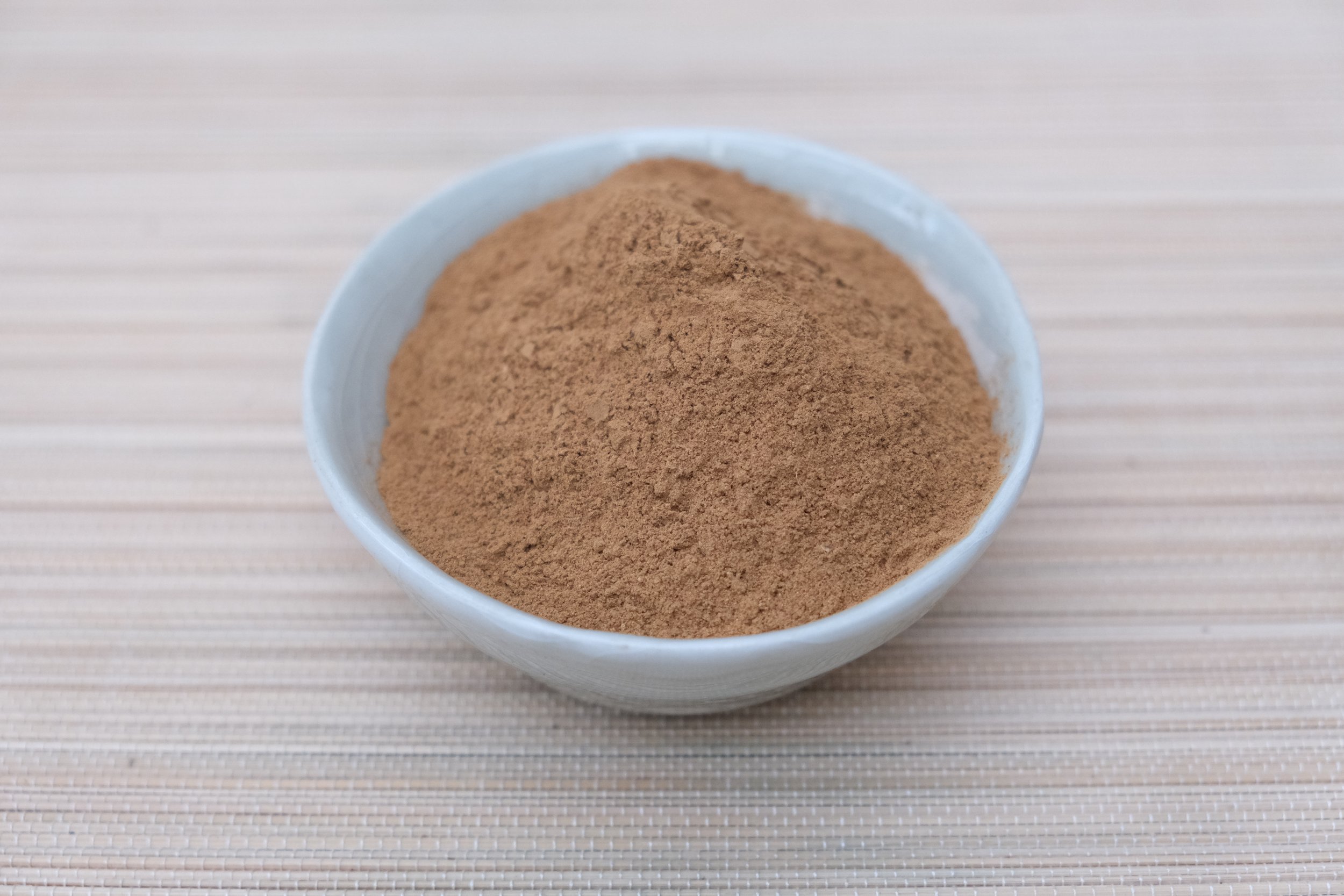
 Image 1 of 1
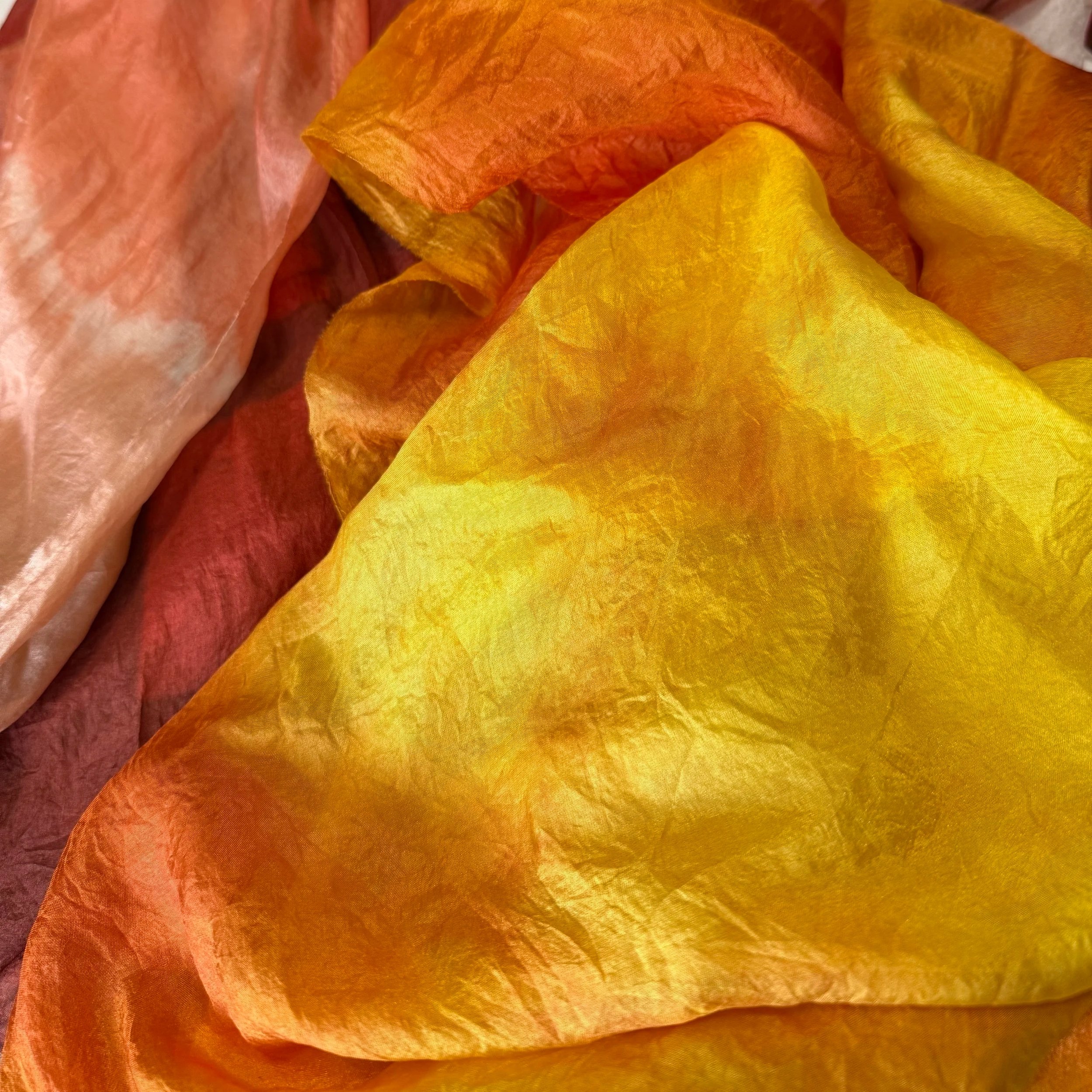
Dyestuff: Granatonine
Plant part used: The rind of the fruit
Resulting colours: Golden yellows - leaning towards greys and greens with iron
Also known as the dyers’ golden apple, pomegranates have long been used to produce fawn yellows without mordants, or rich golden yellows when combined with alum. The addition of iron yields deep blacks, while underdyeing with indigo creates emerald greens. Valued for their exceptional lightfastness and wash resistance, pomegranates have been central to dyeing traditions for centuries, appearing on everything from dyed leather in Marrakech to Kağızman carpets from Anatolia.
Cultivation in the Himalayas
Native to the Himalayas, pomegranate is an attractive deciduous shrub that produces scarlet-red flowers in the spring and fruit after 3 years of growing. The rinds are harvested in autumn when the fruit is ripe and dried with yields of up to 1kg of dyestuff a year.
Head to our How To page!
Dyestuff: Granatonine
Plant part used: The rind of the fruit
Resulting colours: Golden yellows - leaning towards greys and greens with iron
Also known as the dyers’ golden apple, pomegranates have long been used to produce fawn yellows without mordants, or rich golden yellows when combined with alum. The addition of iron yields deep blacks, while underdyeing with indigo creates emerald greens. Valued for their exceptional lightfastness and wash resistance, pomegranates have been central to dyeing traditions for centuries, appearing on everything from dyed leather in Marrakech to Kağızman carpets from Anatolia.
Cultivation in the Himalayas
Native to the Himalayas, pomegranate is an attractive deciduous shrub that produces scarlet-red flowers in the spring and fruit after 3 years of growing. The rinds are harvested in autumn when the fruit is ripe and dried with yields of up to 1kg of dyestuff a year.
Head to our How To page!